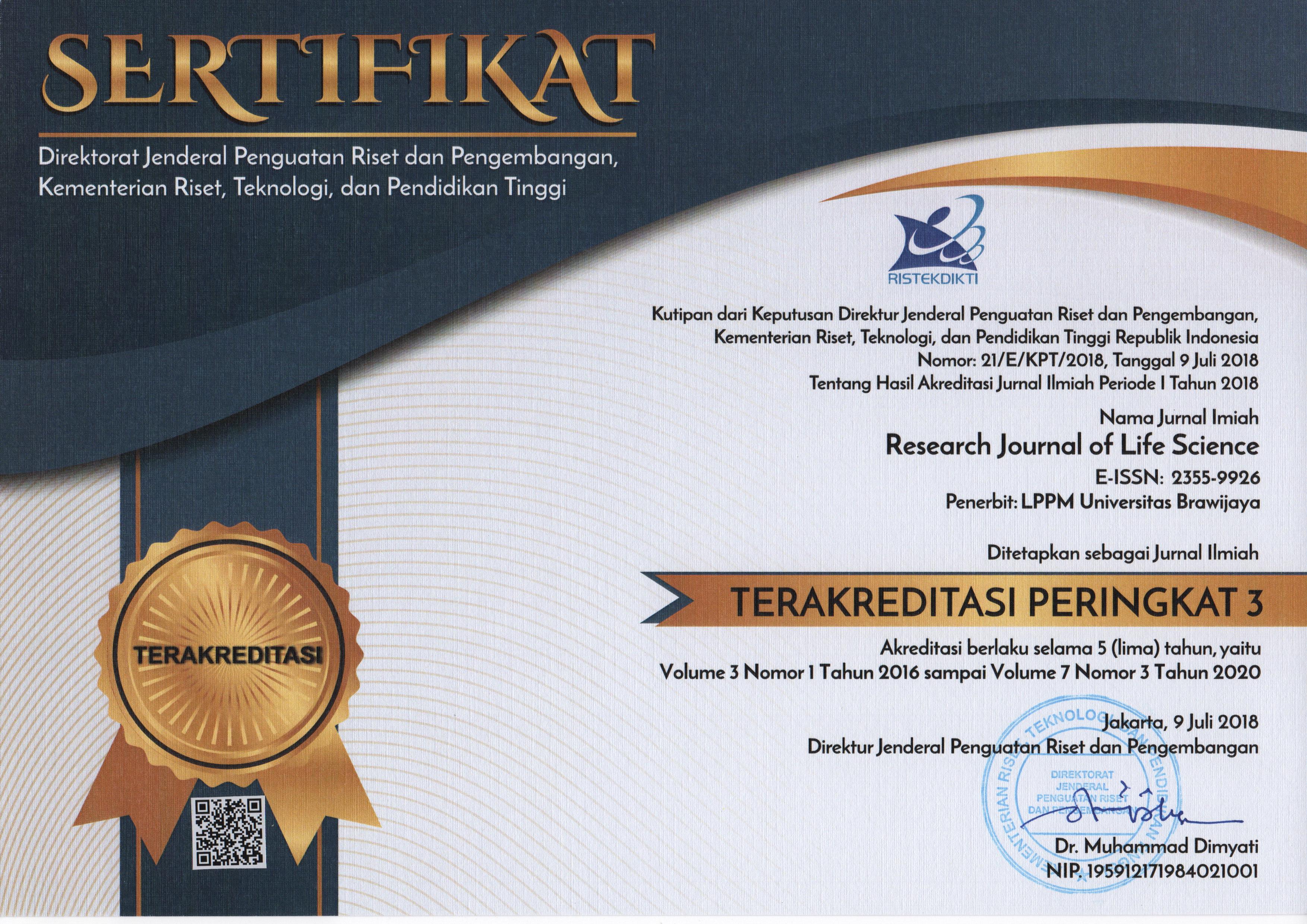
Acreditation Certificate


 Email this article (Login required)
Email the author (Login required)




Journal Index






Further evidence for host specialization of Caenorhabditis inopinata on Ficus septica and its association with pollinating fig wasps
Abstract
Interactions between multicellular organisms and their associated microfauna often reflect complex coevolutionary processes. Caenorhabditis inopinata, the closest known relative of the model nematode C. elegans, has been reported to exhibit a specific association with fresh fruits of Ficus septica and pollinating fig wasps (Ceratosolen), although this relationship requires further confirmation. In this study, we investigated the association, host specialization, and elevational distribution of C. inopinata in a previously unreported region. Fresh fig fruits from seven Ficus species (including F. septica) were sampled. Nematodes were identified using morphological, crossing, and molecular approaches. All Caenorhabditis isolates recovered from fresh F. septica fruits were identified as C. inopinata, whereas no C. inopinata was detected on other Ficus species. C. inopinata was absent during the pre-receptive fig phase but present in all pollinated phases. Along an elevational gradient, pollinating fig wasps declined sharply at higher elevations, whereas C. inopinata remained detectable, suggesting that fig wasps facilitate dispersal but are not the sole determinant of elevational distribution. Nevertheless, more extensive sampling across diverse ecological conditions is required to confirm these findings.
Keywords
Full Text:
PDFReferences
Hammerschmith, E. W., Woodruff, G. C., Moser, K. A., Johnson, E., & Phillips, P. C. (2022). Opposing directions of stage ‑ specific body shape change in a close relative of C . elegans. BMC Zoology, 1–11. https://doi.org/10.1186/s40850-022-00131-y
Jauharlina., Sriwati, R., Yusmaini, Natsumi, K., & Compton, S. (2015). Fig Pollinating Wasp Transfers Nematodes into Figs of Ficus racemosa in Sumatra , Indonesia. Proceedings of The 5th Annual International Conference Syiah Kuuala University (AIC Unsyiah).
Jandér, K. C. (2021). Fitness costs for fig wasps that fail to pollinate their host Ficus perforata. Symbiosis, 84(2), 171–178. https://doi.org/10.1007/s13199-021-00781-5
Jauharlina, J., Oktarina, H., Sriwati, R., Kanzaki, N., Quinnell, R. J., & Compton, S. G. (2019). Tritrophic interactions involving a dioecious fig tree, its fig pollinating wasp and fig nematodes. BioRxiv. https://doi.org/10.1101/736652
Jauharlina, Oktarina, H., Sriwati, R., Sayuthi, M., Kanzaki, N., Quinnell, R. J., & Compton, S. G. (2022). Association of Fig Pollinating Wasps and Fig Nematodes inside Male and Female Figs of a Dioecious Fig Tree in Sumatra, Indonesia. Insects, 13(4). https://doi.org/10.3390/insects13040320
Kanzaki, N., Tsai, I. J., Tanaka, R., Hunt, V. L., Liu, D., Tsuyama, K., Maeda, Y., Namai, S., Kumagai, R., Tracey, A., Holroyd, N., Doyle, S. R., Woodruff, G. C., Murase, K., Kitazume, H., Chai, C., Akagi, A., Panda, O., Ke, H. M., … Kikuchi, T. (2018). Biology and genome of a newly discovered sibling species of Caenorhabditis elegans. Nature Communications, 9(1), 1–12. https://doi.org/10.1038/s41467-018-05712-5
Kiontke, K., Félix, M. A., Ailion, M., Rockman, M. V., Braendle, C., Pénigault, J. B., & Fitch, D. H. A. (2011). A phylogeny and molecular barcodes for Caenorhabditis, with numerous new species from rotting fruits. BMC Evolutionary Biology, 11(1). https://doi.org/10.1186/1471-2148-11-339
Kiontke, K., & Sudhaus, W. (2006). Ecology of Caenorhabditis species. In David, H.A., Wormbook, 1–14. https://doi.org/10.1895/wormbook.1.37.1
Link, A. C., Moser, K. A., Wang, J., & Woodruff, G. C. (2025). A novel, fig-associated microbe promotes reproductive succes via variable life history mechanisms in C. elegans and C. inopinata. BioRxiv.
Meneely, P. M., Dahlberg, C. L., & Rose, J. K. (2019). Working with Worms: Caenorhabditis elegans as a Model Organism. Current Protocols in Essential Laboratory Techniques, 19(1), 1–35. https://doi.org/10.1002/cpet.35
Piedra-malagón, E. M., Hernández-ramos, B., Mirón-monterrosas, A., Cornejo-tenorio, G., Navarrete-segueda, A., & Ibarra-manríquez, G. (2019). Syconium development in Ficus petiolaris ( Ficus , sect . Americanae , Moraceae ) and the relationship with pollinator and parasitic wasps. Botany, 97: 190–203.
Schulenburg, H., & Félix, M. A. (2017). The natural biotic environment of Caenorhabditis elegans. Genetics, 206(1), 55–86. https://doi.org/10.1534/genetics.116.195511
Souto-vilarós, D., Houadria, M., Michalek, J., Sisol, M., Isua, B., Kuyaiva, T., Weiblen, G. D., Novotny, V., Segar, S. T., Souto-vilarós, D., & Segar, S. T. (2020). Contrasting patterns of fig wasp communities along Mt Wilhel, Papua New Guinea. Biotropica, 52: 323–334. https://doi.org/10.1111/btp.12763
Sun, B., & Wang, R. (2019). Foundress numbers and the timing of selective events during interactions between figs and fig wasps. Scientific Reports, 9: 1–8. https://doi.org/10.1038/s41598-018-37498-3
van Kolfschoten, L., Dück, L., Lind, M. I., & Jandér, K. C. (2022). Rising temperatures threaten pollinators of fig trees—Keystone resources of tropical forests. Ecology and Evolution, 12(9), 1–14. https://doi.org/10.1002/ece3.9311
Wang, R., Compton, S. G., Quinnell, R. J., Peng, Y., Barwell, L., & Chen, Y. (2015). Insect responses to host plant provision beyond natural boundaries : latitudinal and altitudinal variation in a Chinese fig wasp community. Ecology and Evolution, 5(17): 2641-2656. https://doi.org/10.1002/ece3.1622
Woodruff, G. C., Johnson, E., & Phillips, P. C. (2019). A large close relative of C. elegans is slow-developing but not long-lived. BMC Evolutionary Biology, 19(1), 1–14. https://doi.org/10.1186/s12862-019-1388-1
Woodruff, G. C., & Phillips, P. C. (2018). Field studies reveal a close relative of C. elegans thrives in the fresh figs of Ficus septica and disperses on its Ceratosolen pollinating wasps. BMC Ecology, 18(1), 1–16. https://doi.org/10.1186/s12898-018-0182-z
Zhang, X. W., & Li, L. H. (2020). An early gall-inducing parasitic wasp adversely affects the fitness of its host Ficus tree but not the pollinator. Scientific Reports, 10(1), 1–7. https://doi.org/ 10.1038/s41598-020-71738-9.
Zhang, Y., Guan, Y., Li, Z., Wang, Y., Chen, C., & Yang, X. (2025). The Entry of Pollinating Fig Wasps Plays a Pivotal Role in the Developmental Phase and Metabolic Expression Changes in Ficus hookeriana Figs. Forests, 16: 165. https:// doi.org/10.3390/f16010165
DOI: https://doi.org/10.21776/10.21776/ub.rjls.2024.012.01.5
Refbacks
- There are currently no refbacks.

This work is licensed under a Creative Commons Attribution-NonCommercial 4.0 International License.
